Research on Game designer/concept artist and the Game they worked on.
Assassin's Creed
game mechanic - parkour

image retrieved from: http://blogs-images.forbes.com/carolpinchefsky/files/2012/10/AssassinsCreed.jpg

Alexandre Breault
the lead game designer
image retrieved from: http://images4.wikia.nocookie.net/__cb20110825224615/assassinscreed/images/9/9f/Alexandre_Breault.jpg
Biography
Research on Game designer/concept artist and the Game they worked on.
Assassin's Creed
game mechanic - parkour

image retrieved from: http://blogs-images.forbes.com/carolpinchefsky/files/2012/10/AssassinsCreed.jpg

Alexandre Breault
the lead game designer
image retrieved from: http://images4.wikia.nocookie.net/__cb20110825224615/assassinscreed/images/9/9f/Alexandre_Breault.jpg
Biography
He completed his Master Degree in Film Study at the Université de Montréal in 2004. He then joined Ubisoft as a Game Designer in 2005.
During his time there, he participated in the design of Far Cry Instincts: Evolution, Lost: Via Domus, Naruto: The Broken Bond,Assassin's Creed II, Assassin's Creed: Brotherhood, and James Cameron’s Avatar: The Game. Assassin's Creed: Revelations was his first game as Lead Game Designer and as a Game Design Director.
He completed his Master Degree in Film Study at the Université de Montréal in 2004. He then joined Ubisoft as a Game Designer in 2005.
During his time there, he participated in the design of Far Cry Instincts: Evolution, Lost: Via Domus, Naruto: The Broken Bond,Assassin's Creed II, Assassin's Creed: Brotherhood, and James Cameron’s Avatar: The Game. Assassin's Creed: Revelations was his first game as Lead Game Designer and as a Game Design Director.
Trivia
- Along with Alexandre Amancio, he was responsible for coordinating all six development studios involved inAssassin's Creed: Revelations.
- Assassin's Creed: Revelations was to be both Alexandre Amancio and his final development project at Ubisoft Montreal before leaving the company.
retrieved from: http://assassinscreed.wikia.com/wiki/Alexandre_Breault
How the game was made.
Patrice Désilets wanted to be an actor. In the early ’90s, the future creative director of Assassin’s Creedsat in classes at Collège Édouard-Montpetit in Quebec, Canada, and listened carefully to his teachers as they spoke about legendary ‘method’ guru Stanislavski, the Actors Studio and the difficulties of French speakers performing Shakespeare. One day, he decided he was wasting his time.
“I suddenly realised, at just the right time, that there were people more talented than myself,” the seasoned creative director, who now works for THQ, tells us in his mellow French-Canadian accent. So instead of stepping in front of the camera, he studied for a BA in film studies at the city’s prestigious university. And when the videogame industry beckoned, he joined Ubisoft. Little did he realise that the skills he’d honed on the stage would prove useful in his new job.
At the end of 2003, Désilets had just finished working on Prince Of Persia: The Sands Of Time as its creative director. Ubisoft had earmarked him for making the next instalment, but even after a month off recharging his batteries, he couldn’t shake the feeling that he was ploughing barren earth. “The problem is that a prince isn’t an action figure,” he explains. “A prince is someone who’s waiting to become king.”
 Frustrated, Désilets remembered a book he’d read about the history of secret societies. His favourite chapter was about Hassan-i-Sabbah, a Muslim missionary in the 11th century who founded the Asasiyun, later known simply as the assassins. They had a fearsome reputation for delivering swift death to their master’s political and religious enemies. For Désilets, it was the start of an idea: what if you were an assassin, not a prince?
“For a year in preproduction, the game was called Prince Of Persia: Assassin,” he explains. The objective revolved around an AI-controlled, childlike prince who had to be rescued by the player, an assassin in Jerusalem, and escorted to safety. “It’s funny when I talk about it, because I know it would have been a good game. You were an assassin, so a killer and a fighter, and you had to save the princess. Only the princess was really a boy – a prince with special powers.”
What became Assassin’s Creed evolved from that point on, as the assassin slowly squeezed the prince out of the frame. “I never suggested a new IP per se,” says Désilets. “All the time I was saying to them, ‘It’s a Prince Of Persia game and you’re an assassin.’” He laughs: “I’m a bad employee, if you think about it. I was asked to do a Prince Of Persia game and I didn’t. Ubisoft were like, ‘That’s not what we want. We still need our prince!’”
Frustrated, Désilets remembered a book he’d read about the history of secret societies. His favourite chapter was about Hassan-i-Sabbah, a Muslim missionary in the 11th century who founded the Asasiyun, later known simply as the assassins. They had a fearsome reputation for delivering swift death to their master’s political and religious enemies. For Désilets, it was the start of an idea: what if you were an assassin, not a prince?
“For a year in preproduction, the game was called Prince Of Persia: Assassin,” he explains. The objective revolved around an AI-controlled, childlike prince who had to be rescued by the player, an assassin in Jerusalem, and escorted to safety. “It’s funny when I talk about it, because I know it would have been a good game. You were an assassin, so a killer and a fighter, and you had to save the princess. Only the princess was really a boy – a prince with special powers.”
What became Assassin’s Creed evolved from that point on, as the assassin slowly squeezed the prince out of the frame. “I never suggested a new IP per se,” says Désilets. “All the time I was saying to them, ‘It’s a Prince Of Persia game and you’re an assassin.’” He laughs: “I’m a bad employee, if you think about it. I was asked to do a Prince Of Persia game and I didn’t. Ubisoft were like, ‘That’s not what we want. We still need our prince!’”
 Now, of course, Assassin’s Creed is a multibillion-dollar IP with a string of games, as well as novels, comics and perhaps even movies. Yet the transformation into one of the biggest gaming series of this generation didn’t run as smoothly as its fleet-footed protagonists. Indeed, it was an arduous development that saw Ubisoft Montreal craft both a new engine and a new story. It also reintroduced Désilets to his love of acting. Playing Altaïr wasn’t just a game for him. It was also the lead role that the 30-year-old creative director had been waiting for The studio where the game was made is housed in a renovated textiles factory in the Mile End district of Montreal. In 2004, it was home to Désilets’ team, all Sands Of Time veterans, half of whom were engineers. By the end of Assassin’s Creed’s three-year development, the team had swelled to around 120 people on PC alone. But in the early days it was just 20.
Those engineers were tasked with building a new engine that would facilitate the game’s ambitious design aims: a sandbox world in the Middle East during the Crusades; a free-running protagonist who could seamlessly traverse his environment; and an AI system that would enable enemies to detect what the player was up to and pursue them through alleyways and over roofs. Ubisoft also wanted to make the most of the leap in processing power offered by the incoming generation of consoles – the 360 and PS3.
Now, of course, Assassin’s Creed is a multibillion-dollar IP with a string of games, as well as novels, comics and perhaps even movies. Yet the transformation into one of the biggest gaming series of this generation didn’t run as smoothly as its fleet-footed protagonists. Indeed, it was an arduous development that saw Ubisoft Montreal craft both a new engine and a new story. It also reintroduced Désilets to his love of acting. Playing Altaïr wasn’t just a game for him. It was also the lead role that the 30-year-old creative director had been waiting for The studio where the game was made is housed in a renovated textiles factory in the Mile End district of Montreal. In 2004, it was home to Désilets’ team, all Sands Of Time veterans, half of whom were engineers. By the end of Assassin’s Creed’s three-year development, the team had swelled to around 120 people on PC alone. But in the early days it was just 20.
Those engineers were tasked with building a new engine that would facilitate the game’s ambitious design aims: a sandbox world in the Middle East during the Crusades; a free-running protagonist who could seamlessly traverse his environment; and an AI system that would enable enemies to detect what the player was up to and pursue them through alleyways and over roofs. Ubisoft also wanted to make the most of the leap in processing power offered by the incoming generation of consoles – the 360 and PS3.
 The team aimed to recreate the world of the Third Crusade in 1191 as a place that the player would not just visit, but inhabit. Immersion was key, with the team aiming to give you the sense that you were part of a living, breathing city in the Holy Land, and provide the freedom to choose how to carry out your mission to assassinate nine leading Templars. The challenge would lie in blending into the environment, using ‘social stealth’ to become part of the crowd, and in using Altaïr’s athletic parkour abilities to scale buildings, dodge guards and track down your targets.
The first couple of years were hard. “It’s tough trying to build up a new IP, a new engine and a new game world at the same time,” says Désilets.“For the first year, there’s nothing to play at all. There’s nothing even on your screen. So you fake it; you go into 3ds Max and Maya and you build movies, and you do a lot of documentation and drawing. But you can’t test anything.”
Assassin’s Creed wasn’t the first Ubisoft game to make art and design work hand in hand. Splinter Cell, with its dynamic lighting effects, had already created a world of shadows for players to sneak through.Assassin’s Creed swapped that game’s chiaroscuro for handholds and rooftop routes, and ensured that the careful placement of ledges and platforms opened up the game’s cities for you to traverse. Meanwhile, the crowd gives you a place to hide in plain sight.
The team aimed to recreate the world of the Third Crusade in 1191 as a place that the player would not just visit, but inhabit. Immersion was key, with the team aiming to give you the sense that you were part of a living, breathing city in the Holy Land, and provide the freedom to choose how to carry out your mission to assassinate nine leading Templars. The challenge would lie in blending into the environment, using ‘social stealth’ to become part of the crowd, and in using Altaïr’s athletic parkour abilities to scale buildings, dodge guards and track down your targets.
The first couple of years were hard. “It’s tough trying to build up a new IP, a new engine and a new game world at the same time,” says Désilets.“For the first year, there’s nothing to play at all. There’s nothing even on your screen. So you fake it; you go into 3ds Max and Maya and you build movies, and you do a lot of documentation and drawing. But you can’t test anything.”
Assassin’s Creed wasn’t the first Ubisoft game to make art and design work hand in hand. Splinter Cell, with its dynamic lighting effects, had already created a world of shadows for players to sneak through.Assassin’s Creed swapped that game’s chiaroscuro for handholds and rooftop routes, and ensured that the careful placement of ledges and platforms opened up the game’s cities for you to traverse. Meanwhile, the crowd gives you a place to hide in plain sight.
 Once the engine was built and the team began working on the game itself, that interplay between art and design became pivotal. “I had to direct the work around all the interaction in the environment,” recalls lead level designer David Châteauneuf, who went on to co-found Montreal-based indie startup Red Barrels. “I had to make sure that almost everything was climbable. All the houses had to be built in a specific way, and all the props had to be created with restraint and put into the environment correctly. When I saw the huge cathedral in Acre, I realised I’d done my job well. That cathedral was built by an artist and it’s 100 per cent climbable. Art and design went hand in hand for the first time in my career.” What was the philosophy behind all of this? “Liberty,” he explains. “Making sure the level was built in order to make the player feel free to do what he wanted to do. From the beginning to the end, I always tried to make sure that the environment offered many possibilities to the player. I always had to make sure that everything was put at the right place so that the player could choose his own strategy to approach his target.”
It wasn’t just the architecture that was moulded to the game’s demands. The cities’ inhabitants were, too. The generational leap between the consoles enabled the team to think big – certainly bigger than Sands Of Time – when creating a world that was both sprawling and inhabited.
“In Sands Of Time, I wanted the palace to be full of people,” explains Désilets. “But I couldn’t draw more than eight characters, because we only had 32MB of RAM on the PlayStation 2. I needed a portion of that RAM for the [time] rewind [mechanic], so six or seven characters was the maximum onscreen.”
With the new consoles, though, a crowd was possible: a living, breathing entity of 120 pot bearers, scholars and drunks that could help or hinder your assassin and create possibilities.
Once the engine was built and the team began working on the game itself, that interplay between art and design became pivotal. “I had to direct the work around all the interaction in the environment,” recalls lead level designer David Châteauneuf, who went on to co-found Montreal-based indie startup Red Barrels. “I had to make sure that almost everything was climbable. All the houses had to be built in a specific way, and all the props had to be created with restraint and put into the environment correctly. When I saw the huge cathedral in Acre, I realised I’d done my job well. That cathedral was built by an artist and it’s 100 per cent climbable. Art and design went hand in hand for the first time in my career.” What was the philosophy behind all of this? “Liberty,” he explains. “Making sure the level was built in order to make the player feel free to do what he wanted to do. From the beginning to the end, I always tried to make sure that the environment offered many possibilities to the player. I always had to make sure that everything was put at the right place so that the player could choose his own strategy to approach his target.”
It wasn’t just the architecture that was moulded to the game’s demands. The cities’ inhabitants were, too. The generational leap between the consoles enabled the team to think big – certainly bigger than Sands Of Time – when creating a world that was both sprawling and inhabited.
“In Sands Of Time, I wanted the palace to be full of people,” explains Désilets. “But I couldn’t draw more than eight characters, because we only had 32MB of RAM on the PlayStation 2. I needed a portion of that RAM for the [time] rewind [mechanic], so six or seven characters was the maximum onscreen.”
With the new consoles, though, a crowd was possible: a living, breathing entity of 120 pot bearers, scholars and drunks that could help or hinder your assassin and create possibilities.
 Running through these crowded streets as Altaïr – whose Arabic name translates to ‘the flying one’ – you not only feel part of a living medieval city, but also the master of its spaces. You push the analog stick and he leaps and bounds, jumps and climbs, swings and pushes through everything in front of him.
When quizzed about the game’s distinctive parkour, Désilets draws a surprising comparison. “I wanted to replace the car of GTA with a thirdperson action character. The pleasure of driving a car in Liberty City should be the same as the main character in Assassin’s Creed.”
Instead of asking players to make flawless individual leaps, Assassin’s Creed asked you to play a bigger game of choosing the best routes, finding your prey and stalking them, and preempting the guards or shaking them off if you’re discovered. It asked you to have the situational awareness of a killer, to walk into a room and quietly scope the exits and entrances, lines of sight and potential choke points. Everything in the game, even the overarching storyline (see ‘Ancestor worship’), feeds into the fiction that you’re playing a part – pretending to be an assassin rather than controlling an avatar.
And so Désilets found himself returning to the stage. Only this time it was a virtual one, populated by an audience of crowds and NPC enemies. “For me, videogame characters are the beginning of a roleplay,” he explains. “In general, in games you don’t play a lot of the character – you fight the control scheme or the character does something you can’t relate to. We wanted to make Altaïr close to a real human being. We had this idea of making the control scheme like controlling a puppet – so you could play the actor part of it. That’s why you don’t lose control in the cinematics.”
When Désilets first thought of this, his acting classes came back to him. Stanislavski’s theory that physical movements hold the key to an actor’s emotional memory seems particularly apt: you might not be able to emote through speech, but you can do so through Altaïr’s actions – by shoving through crowds, attacking passers-by or quietly blending in among scholars.
Running through these crowded streets as Altaïr – whose Arabic name translates to ‘the flying one’ – you not only feel part of a living medieval city, but also the master of its spaces. You push the analog stick and he leaps and bounds, jumps and climbs, swings and pushes through everything in front of him.
When quizzed about the game’s distinctive parkour, Désilets draws a surprising comparison. “I wanted to replace the car of GTA with a thirdperson action character. The pleasure of driving a car in Liberty City should be the same as the main character in Assassin’s Creed.”
Instead of asking players to make flawless individual leaps, Assassin’s Creed asked you to play a bigger game of choosing the best routes, finding your prey and stalking them, and preempting the guards or shaking them off if you’re discovered. It asked you to have the situational awareness of a killer, to walk into a room and quietly scope the exits and entrances, lines of sight and potential choke points. Everything in the game, even the overarching storyline (see ‘Ancestor worship’), feeds into the fiction that you’re playing a part – pretending to be an assassin rather than controlling an avatar.
And so Désilets found himself returning to the stage. Only this time it was a virtual one, populated by an audience of crowds and NPC enemies. “For me, videogame characters are the beginning of a roleplay,” he explains. “In general, in games you don’t play a lot of the character – you fight the control scheme or the character does something you can’t relate to. We wanted to make Altaïr close to a real human being. We had this idea of making the control scheme like controlling a puppet – so you could play the actor part of it. That’s why you don’t lose control in the cinematics.”
When Désilets first thought of this, his acting classes came back to him. Stanislavski’s theory that physical movements hold the key to an actor’s emotional memory seems particularly apt: you might not be able to emote through speech, but you can do so through Altaïr’s actions – by shoving through crowds, attacking passers-by or quietly blending in among scholars.
 Désilets remains convinced that acting theory is useful to videogame creators. “For an actor, intention is really important,” he argues. “You have to have a story in your head, and that story will be there in your eyes, even if you’re just sitting in a chair.” For him, those principles spill over into playing games, too. “When I play Assassin’s Creed, I turn my back to the people who are talking to me in the cinematics,” says Désilets. “This is what I do, this is how I play Altaïr. My Altaïr does not look at you when you speak to him. This is me being the actor of Altaïr.”
He remains proud of the game’s potential as a roleplaying simulator. “I like the first Assassin’s Creedbecause it’s the purest one. There’s a bunch of stories that you can have, but it’s all in your head. You have to create your own adventures. Whereas in Assassin’s Creed II, we created the adventures for you and you’re following them. For me, the first one is an amazing toy. The second one is the real game with rules and missions and it’s really precise. But personally I like the poetry of the first one. It’s pure.” In keeping with Hassan-i-Sabbah’s supposed maxim, “Nothing is true, everything is permitted,” players were cut loose in a world that explicitly played up its own virtuality. “It was the real motto of the assassins, and for an open-world game it’s the perfect creed,” laughs Désilets.
So would he describe playing Assassin’s Creed as a kind of improv? “That’s totally right. Out in the kingdom, with your horse, there are so many places with little setups with Crusaders where you can tell a story. When you get close to Damascus, there’s a guy on a stage and he has 35 soldiers in front of him. If you kill him, they all chase you. I played that and it became my little story. With Assassin’s Creed, our problem was we never actually asked anyone to do it. Most of the players just pass by those setups. But in Assassin’s Creed II, we had a mission for all of them.”
Désilets remains convinced that acting theory is useful to videogame creators. “For an actor, intention is really important,” he argues. “You have to have a story in your head, and that story will be there in your eyes, even if you’re just sitting in a chair.” For him, those principles spill over into playing games, too. “When I play Assassin’s Creed, I turn my back to the people who are talking to me in the cinematics,” says Désilets. “This is what I do, this is how I play Altaïr. My Altaïr does not look at you when you speak to him. This is me being the actor of Altaïr.”
He remains proud of the game’s potential as a roleplaying simulator. “I like the first Assassin’s Creedbecause it’s the purest one. There’s a bunch of stories that you can have, but it’s all in your head. You have to create your own adventures. Whereas in Assassin’s Creed II, we created the adventures for you and you’re following them. For me, the first one is an amazing toy. The second one is the real game with rules and missions and it’s really precise. But personally I like the poetry of the first one. It’s pure.” In keeping with Hassan-i-Sabbah’s supposed maxim, “Nothing is true, everything is permitted,” players were cut loose in a world that explicitly played up its own virtuality. “It was the real motto of the assassins, and for an open-world game it’s the perfect creed,” laughs Désilets.
So would he describe playing Assassin’s Creed as a kind of improv? “That’s totally right. Out in the kingdom, with your horse, there are so many places with little setups with Crusaders where you can tell a story. When you get close to Damascus, there’s a guy on a stage and he has 35 soldiers in front of him. If you kill him, they all chase you. I played that and it became my little story. With Assassin’s Creed, our problem was we never actually asked anyone to do it. Most of the players just pass by those setups. But in Assassin’s Creed II, we had a mission for all of them.”
 In the autumn of 2007, it was hard not to have heard of Assassin’s Creed. In the run up to its release, Ubisoft’s PR machine went into overdrive. A clever marketing campaign hinted at the game’s sci-fi elements and turned them into a tantalising, mysterious hook. Trailer footage suggested that the game was more than just a story of 12th century assassins, seeing characters flicker and stutter like glitching virtual reality avatars.
Yet when Assassin’s Creed was released that November, it suffered a surprising backlash. The game had been so hyped that its limitations were thrown back at it: its repetitive mission structure, a paucity of things to do, and the now-explained sci-fi element that made many bristle.
“The game became a bit bigger than us,” says Désilets. “When we saw the buzz, we were like, ‘Holy shit! People really, really want this game to be perfect and we’re still struggling to make it.’”
In the autumn of 2007, it was hard not to have heard of Assassin’s Creed. In the run up to its release, Ubisoft’s PR machine went into overdrive. A clever marketing campaign hinted at the game’s sci-fi elements and turned them into a tantalising, mysterious hook. Trailer footage suggested that the game was more than just a story of 12th century assassins, seeing characters flicker and stutter like glitching virtual reality avatars.
Yet when Assassin’s Creed was released that November, it suffered a surprising backlash. The game had been so hyped that its limitations were thrown back at it: its repetitive mission structure, a paucity of things to do, and the now-explained sci-fi element that made many bristle.
“The game became a bit bigger than us,” says Désilets. “When we saw the buzz, we were like, ‘Holy shit! People really, really want this game to be perfect and we’re still struggling to make it.’”
 Despite reviewers’ and players’ complaints, Assassin’s Creed sold over 10 million copies (“For an 80 Metacritic game, that’s a lot,” marvels Désilets) and launched a billion-dollar franchise.
As the series prepares to reveal a new chapter in its story, set in the American Revolutionary War, Désilets’ dream of helping players roleplay assassins has proven it holds enduring appeal. Like actors waiting in the wings, the chance to don the cowl again is a role we’re more than willing to take.
retrieved from: http://www.edge-online.com/features/making-assassins-creed/4/
Despite reviewers’ and players’ complaints, Assassin’s Creed sold over 10 million copies (“For an 80 Metacritic game, that’s a lot,” marvels Désilets) and launched a billion-dollar franchise.
As the series prepares to reveal a new chapter in its story, set in the American Revolutionary War, Désilets’ dream of helping players roleplay assassins has proven it holds enduring appeal. Like actors waiting in the wings, the chance to don the cowl again is a role we’re more than willing to take.
retrieved from: http://www.edge-online.com/features/making-assassins-creed/4/
Game mechanics
Assassin's Creed
- moving (free running, climbing, parkour etc.)
- stabbing
- dogfight
- shooting
similar mechanics are used in following games:

Mirror's Edge
- moving (free running, parkour)
Even though the perspective (1rst person) and style of the game are different, the primary game mechanics are quite similar. Both games have a lot of parkour elements. However Assassin's Creed allows you to run around the game world freely while Mirror's Edge requires player to follow the red guide lines.
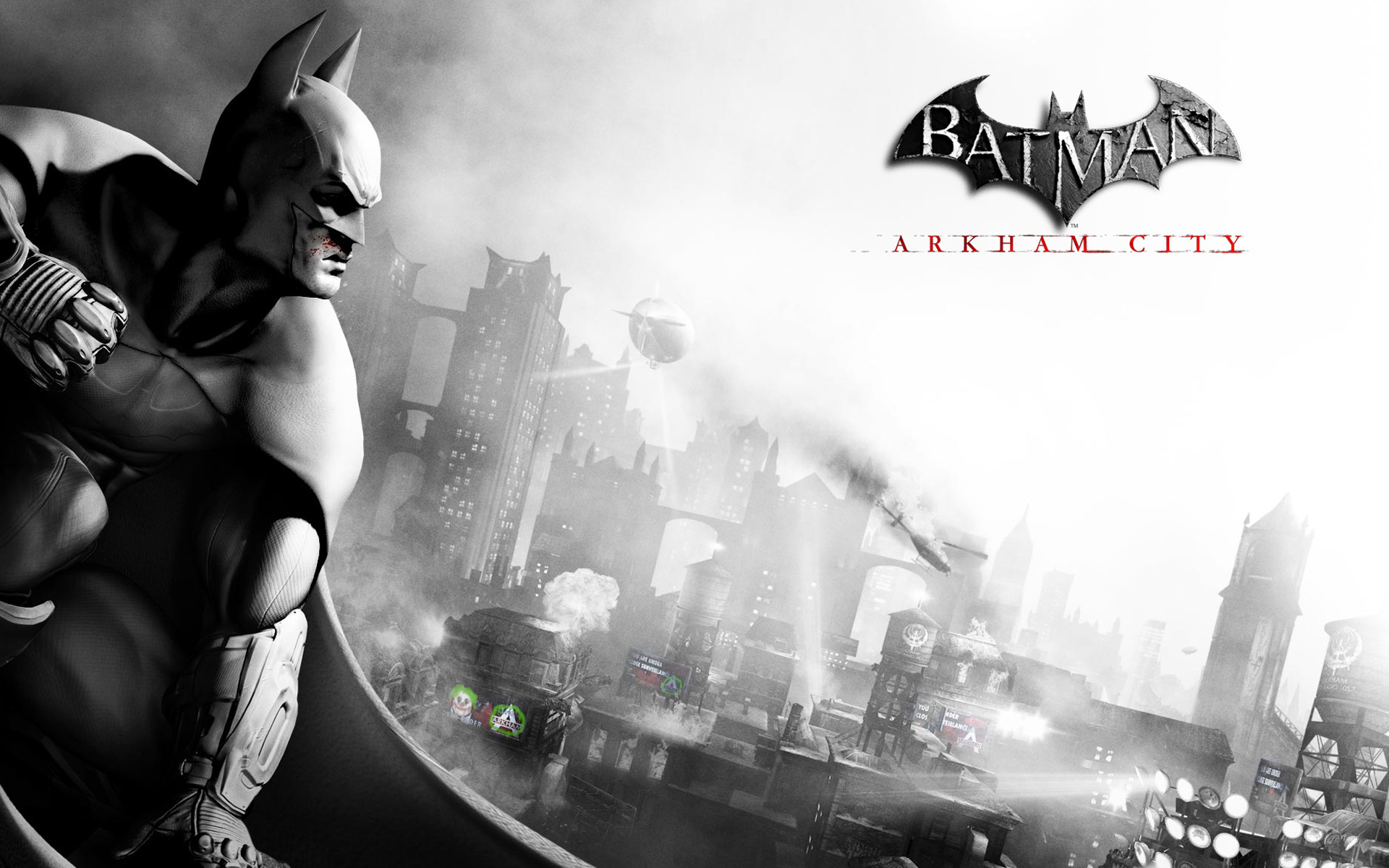
Batman Archam city
- moving (flying, free running, parkour)
- dogfight
Pretty similar game mechanics, however the style and the general mood of the game are completely different. Also in this game apart from free running flying is also involved.
Prince of Persia
- moving (free running, climbing, parkour etc.)
- stabbing
- dogfight

Guacamelee trailer
retrieved from: http://www.youtube.com/watch?v=JBChxYmCxwE
Guacamelee
- moving (free running, climbing, parkour etc.)
Guacamelee final boss gameplay
Call of Duty
game mechanic - shooting

Call of Duty
- shooting
- free running
-stabbing, throwing (grenate, knife) etc.

Counter Strike
- shooting
- free running
-stabbing, throwing (grenate, knife) etc.

Retrieved from:http://sandbox.yoyogames.com/extras/image/name/san2/560/239560/space_invaders_by_molotov_arts.jpg
Space Invaders
-shooting
-limited moving (left/right)

Retrieved from: http://dailyinspires.com/worms-wallpapers/
Worms
- shooting
- moving - crawling (you can go anywhere in the world as long as the landscape allows, and use special tools such as rope)
-stabbing, throwing (grenate, knife) etc
 Retrieved from: http://nerdalors.fr/wp-content/uploads/2012/12/earthworm-jim-hd-playstation-3-ps3-014.jpg
Earthworm Jim
- shooting
- moving

Retrieved from: http://fc02.deviantart.net/fs70/f/2012/005/4/c/my_super_mario_wallpaper_attempt_by_randyadr-d4lfwlt.jpg
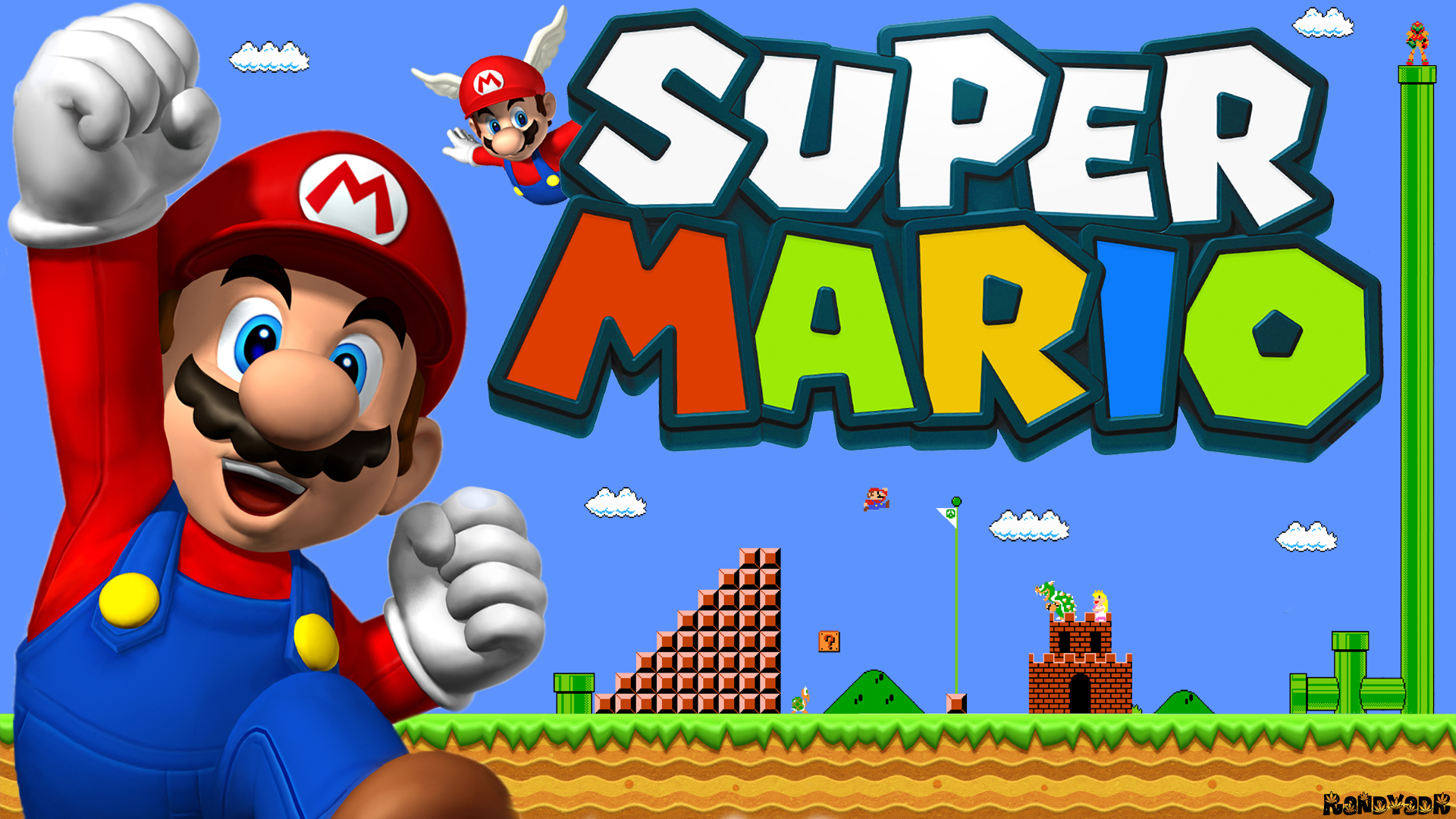
Super mario
game mechanic - collecting goods
Retrieved from: http://fc02.deviantart.net/fs70/f/2012/005/4/c/my_super_mario_wallpaper_attempt_by_randyadr-d4lfwlt.jpg
Super Mario
- jumping
- collecting goods (coins)

Aladdin
- running
- collecting goods (apples, diamonds)
- throwing (apples)
- stabbing

Retrieved from: http://www.gamesdbase.com/Media/SYSTEM/Sony_Playstation/Title/big/Disney-s_Tarzan_-_1999_-_Sony_Computer_Entertainment.jpg
Tarzan
- running
- collecting coins
- throwing (fruits)
- stabbing

Sonic
- Running
- Spinning
- Collecting coins

Mortal Combat
game mechanic - combos
Mortal Kombat
- Dogfight
- Combos

Retrieved from: http://www.hdwallpaperstop.com/wp-content/uploads/2013/06/Tekken-Wallpaper-Backgrounds.jpg
Tekken
- Dogfight
- Combos

Fruit Ninja
- cut (fruits)
- combos

Tower bloxx
- dropp
- combos
- Along with Alexandre Amancio, he was responsible for coordinating all six development studios involved inAssassin's Creed: Revelations.
- Assassin's Creed: Revelations was to be both Alexandre Amancio and his final development project at Ubisoft Montreal before leaving the company.
How the game was made.
Patrice Désilets wanted to be an actor. In the early ’90s, the future creative director of Assassin’s Creedsat in classes at Collège Édouard-Montpetit in Quebec, Canada, and listened carefully to his teachers as they spoke about legendary ‘method’ guru Stanislavski, the Actors Studio and the difficulties of French speakers performing Shakespeare. One day, he decided he was wasting his time.
“I suddenly realised, at just the right time, that there were people more talented than myself,” the seasoned creative director, who now works for THQ, tells us in his mellow French-Canadian accent. So instead of stepping in front of the camera, he studied for a BA in film studies at the city’s prestigious university. And when the videogame industry beckoned, he joined Ubisoft. Little did he realise that the skills he’d honed on the stage would prove useful in his new job.
At the end of 2003, Désilets had just finished working on Prince Of Persia: The Sands Of Time as its creative director. Ubisoft had earmarked him for making the next instalment, but even after a month off recharging his batteries, he couldn’t shake the feeling that he was ploughing barren earth. “The problem is that a prince isn’t an action figure,” he explains. “A prince is someone who’s waiting to become king.”

Frustrated, Désilets remembered a book he’d read about the history of secret societies. His favourite chapter was about Hassan-i-Sabbah, a Muslim missionary in the 11th century who founded the Asasiyun, later known simply as the assassins. They had a fearsome reputation for delivering swift death to their master’s political and religious enemies. For Désilets, it was the start of an idea: what if you were an assassin, not a prince?
“For a year in preproduction, the game was called Prince Of Persia: Assassin,” he explains. The objective revolved around an AI-controlled, childlike prince who had to be rescued by the player, an assassin in Jerusalem, and escorted to safety. “It’s funny when I talk about it, because I know it would have been a good game. You were an assassin, so a killer and a fighter, and you had to save the princess. Only the princess was really a boy – a prince with special powers.”
What became Assassin’s Creed evolved from that point on, as the assassin slowly squeezed the prince out of the frame. “I never suggested a new IP per se,” says Désilets. “All the time I was saying to them, ‘It’s a Prince Of Persia game and you’re an assassin.’” He laughs: “I’m a bad employee, if you think about it. I was asked to do a Prince Of Persia game and I didn’t. Ubisoft were like, ‘That’s not what we want. We still need our prince!’”

Now, of course, Assassin’s Creed is a multibillion-dollar IP with a string of games, as well as novels, comics and perhaps even movies. Yet the transformation into one of the biggest gaming series of this generation didn’t run as smoothly as its fleet-footed protagonists. Indeed, it was an arduous development that saw Ubisoft Montreal craft both a new engine and a new story. It also reintroduced Désilets to his love of acting. Playing Altaïr wasn’t just a game for him. It was also the lead role that the 30-year-old creative director had been waiting for The studio where the game was made is housed in a renovated textiles factory in the Mile End district of Montreal. In 2004, it was home to Désilets’ team, all Sands Of Time veterans, half of whom were engineers. By the end of Assassin’s Creed’s three-year development, the team had swelled to around 120 people on PC alone. But in the early days it was just 20.
Those engineers were tasked with building a new engine that would facilitate the game’s ambitious design aims: a sandbox world in the Middle East during the Crusades; a free-running protagonist who could seamlessly traverse his environment; and an AI system that would enable enemies to detect what the player was up to and pursue them through alleyways and over roofs. Ubisoft also wanted to make the most of the leap in processing power offered by the incoming generation of consoles – the 360 and PS3.

The team aimed to recreate the world of the Third Crusade in 1191 as a place that the player would not just visit, but inhabit. Immersion was key, with the team aiming to give you the sense that you were part of a living, breathing city in the Holy Land, and provide the freedom to choose how to carry out your mission to assassinate nine leading Templars. The challenge would lie in blending into the environment, using ‘social stealth’ to become part of the crowd, and in using Altaïr’s athletic parkour abilities to scale buildings, dodge guards and track down your targets.
The first couple of years were hard. “It’s tough trying to build up a new IP, a new engine and a new game world at the same time,” says Désilets.“For the first year, there’s nothing to play at all. There’s nothing even on your screen. So you fake it; you go into 3ds Max and Maya and you build movies, and you do a lot of documentation and drawing. But you can’t test anything.”
Assassin’s Creed wasn’t the first Ubisoft game to make art and design work hand in hand. Splinter Cell, with its dynamic lighting effects, had already created a world of shadows for players to sneak through.Assassin’s Creed swapped that game’s chiaroscuro for handholds and rooftop routes, and ensured that the careful placement of ledges and platforms opened up the game’s cities for you to traverse. Meanwhile, the crowd gives you a place to hide in plain sight.

Once the engine was built and the team began working on the game itself, that interplay between art and design became pivotal. “I had to direct the work around all the interaction in the environment,” recalls lead level designer David Châteauneuf, who went on to co-found Montreal-based indie startup Red Barrels. “I had to make sure that almost everything was climbable. All the houses had to be built in a specific way, and all the props had to be created with restraint and put into the environment correctly. When I saw the huge cathedral in Acre, I realised I’d done my job well. That cathedral was built by an artist and it’s 100 per cent climbable. Art and design went hand in hand for the first time in my career.” What was the philosophy behind all of this? “Liberty,” he explains. “Making sure the level was built in order to make the player feel free to do what he wanted to do. From the beginning to the end, I always tried to make sure that the environment offered many possibilities to the player. I always had to make sure that everything was put at the right place so that the player could choose his own strategy to approach his target.”
It wasn’t just the architecture that was moulded to the game’s demands. The cities’ inhabitants were, too. The generational leap between the consoles enabled the team to think big – certainly bigger than Sands Of Time – when creating a world that was both sprawling and inhabited.
“In Sands Of Time, I wanted the palace to be full of people,” explains Désilets. “But I couldn’t draw more than eight characters, because we only had 32MB of RAM on the PlayStation 2. I needed a portion of that RAM for the [time] rewind [mechanic], so six or seven characters was the maximum onscreen.”
With the new consoles, though, a crowd was possible: a living, breathing entity of 120 pot bearers, scholars and drunks that could help or hinder your assassin and create possibilities.

Running through these crowded streets as Altaïr – whose Arabic name translates to ‘the flying one’ – you not only feel part of a living medieval city, but also the master of its spaces. You push the analog stick and he leaps and bounds, jumps and climbs, swings and pushes through everything in front of him.
When quizzed about the game’s distinctive parkour, Désilets draws a surprising comparison. “I wanted to replace the car of GTA with a thirdperson action character. The pleasure of driving a car in Liberty City should be the same as the main character in Assassin’s Creed.”
Instead of asking players to make flawless individual leaps, Assassin’s Creed asked you to play a bigger game of choosing the best routes, finding your prey and stalking them, and preempting the guards or shaking them off if you’re discovered. It asked you to have the situational awareness of a killer, to walk into a room and quietly scope the exits and entrances, lines of sight and potential choke points. Everything in the game, even the overarching storyline (see ‘Ancestor worship’), feeds into the fiction that you’re playing a part – pretending to be an assassin rather than controlling an avatar.
And so Désilets found himself returning to the stage. Only this time it was a virtual one, populated by an audience of crowds and NPC enemies. “For me, videogame characters are the beginning of a roleplay,” he explains. “In general, in games you don’t play a lot of the character – you fight the control scheme or the character does something you can’t relate to. We wanted to make Altaïr close to a real human being. We had this idea of making the control scheme like controlling a puppet – so you could play the actor part of it. That’s why you don’t lose control in the cinematics.”
When Désilets first thought of this, his acting classes came back to him. Stanislavski’s theory that physical movements hold the key to an actor’s emotional memory seems particularly apt: you might not be able to emote through speech, but you can do so through Altaïr’s actions – by shoving through crowds, attacking passers-by or quietly blending in among scholars.

Désilets remains convinced that acting theory is useful to videogame creators. “For an actor, intention is really important,” he argues. “You have to have a story in your head, and that story will be there in your eyes, even if you’re just sitting in a chair.” For him, those principles spill over into playing games, too. “When I play Assassin’s Creed, I turn my back to the people who are talking to me in the cinematics,” says Désilets. “This is what I do, this is how I play Altaïr. My Altaïr does not look at you when you speak to him. This is me being the actor of Altaïr.”
He remains proud of the game’s potential as a roleplaying simulator. “I like the first Assassin’s Creedbecause it’s the purest one. There’s a bunch of stories that you can have, but it’s all in your head. You have to create your own adventures. Whereas in Assassin’s Creed II, we created the adventures for you and you’re following them. For me, the first one is an amazing toy. The second one is the real game with rules and missions and it’s really precise. But personally I like the poetry of the first one. It’s pure.” In keeping with Hassan-i-Sabbah’s supposed maxim, “Nothing is true, everything is permitted,” players were cut loose in a world that explicitly played up its own virtuality. “It was the real motto of the assassins, and for an open-world game it’s the perfect creed,” laughs Désilets.
So would he describe playing Assassin’s Creed as a kind of improv? “That’s totally right. Out in the kingdom, with your horse, there are so many places with little setups with Crusaders where you can tell a story. When you get close to Damascus, there’s a guy on a stage and he has 35 soldiers in front of him. If you kill him, they all chase you. I played that and it became my little story. With Assassin’s Creed, our problem was we never actually asked anyone to do it. Most of the players just pass by those setups. But in Assassin’s Creed II, we had a mission for all of them.”

In the autumn of 2007, it was hard not to have heard of Assassin’s Creed. In the run up to its release, Ubisoft’s PR machine went into overdrive. A clever marketing campaign hinted at the game’s sci-fi elements and turned them into a tantalising, mysterious hook. Trailer footage suggested that the game was more than just a story of 12th century assassins, seeing characters flicker and stutter like glitching virtual reality avatars.
Yet when Assassin’s Creed was released that November, it suffered a surprising backlash. The game had been so hyped that its limitations were thrown back at it: its repetitive mission structure, a paucity of things to do, and the now-explained sci-fi element that made many bristle.
“The game became a bit bigger than us,” says Désilets. “When we saw the buzz, we were like, ‘Holy shit! People really, really want this game to be perfect and we’re still struggling to make it.’”

Despite reviewers’ and players’ complaints, Assassin’s Creed sold over 10 million copies (“For an 80 Metacritic game, that’s a lot,” marvels Désilets) and launched a billion-dollar franchise.
As the series prepares to reveal a new chapter in its story, set in the American Revolutionary War, Désilets’ dream of helping players roleplay assassins has proven it holds enduring appeal. Like actors waiting in the wings, the chance to don the cowl again is a role we’re more than willing to take.
retrieved from: http://www.edge-online.com/features/making-assassins-creed/4/
Assassin's Creed
- moving (free running, climbing, parkour etc.)
- stabbing
- dogfight
- shooting
similar mechanics are used in following games:

Mirror's Edge
- moving (free running, parkour)
Even though the perspective (1rst person) and style of the game are different, the primary game mechanics are quite similar. Both games have a lot of parkour elements. However Assassin's Creed allows you to run around the game world freely while Mirror's Edge requires player to follow the red guide lines.

Batman Archam city
- moving (flying, free running, parkour)
- dogfight
Pretty similar game mechanics, however the style and the general mood of the game are completely different. Also in this game apart from free running flying is also involved.

Prince of Persia
- moving (free running, climbing, parkour etc.)
- stabbing
- dogfight
Guacamelee
- moving (free running, climbing, parkour etc.)

Guacamelee trailer
retrieved from: http://www.youtube.com/watch?v=JBChxYmCxwE
- moving (free running, climbing, parkour etc.)
Guacamelee final boss gameplay
Call of Duty
game mechanic - shooting

- shooting
- free running
-stabbing, throwing (grenate, knife) etc.
- free running
-stabbing, throwing (grenate, knife) etc.

Counter Strike
- free running
-stabbing, throwing (grenate, knife) etc.

Retrieved from:http://sandbox.yoyogames.com/extras/image/name/san2/560/239560/space_invaders_by_molotov_arts.jpg
-shooting
-limited moving (left/right)

Retrieved from: http://dailyinspires.com/worms-wallpapers/
- moving - crawling (you can go anywhere in the world as long as the landscape allows, and use special tools such as rope)
-stabbing, throwing (grenate, knife) etc

Retrieved from: http://nerdalors.fr/wp-content/uploads/2012/12/earthworm-jim-hd-playstation-3-ps3-014.jpg
Earthworm Jim
- shooting
- moving

Retrieved from: http://fc02.deviantart.net/fs70/f/2012/005/4/c/my_super_mario_wallpaper_attempt_by_randyadr-d4lfwlt.jpg
Super mario
game mechanic - collecting goods
Retrieved from: http://fc02.deviantart.net/fs70/f/2012/005/4/c/my_super_mario_wallpaper_attempt_by_randyadr-d4lfwlt.jpg
Super Mario
- jumping
- collecting goods (coins)
- Running- jumping
- collecting goods (coins)

Aladdin
- running
- collecting goods (apples, diamonds)
- throwing (apples)
- stabbing

Retrieved from: http://www.gamesdbase.com/Media/SYSTEM/Sony_Playstation/Title/big/Disney-s_Tarzan_-_1999_-_Sony_Computer_Entertainment.jpg
Tarzan
- running
- collecting coins
- throwing (fruits)
- stabbing

Sonic
- Spinning
- Collecting coins

Mortal Combat
game mechanic - combos
Mortal Kombat
- Dogfight
- Combos

Retrieved from: http://www.hdwallpaperstop.com/wp-content/uploads/2013/06/Tekken-Wallpaper-Backgrounds.jpg
Tekken
- Dogfight- Combos

- cut (fruits)
- combos

Tower bloxx
- dropp
- combos